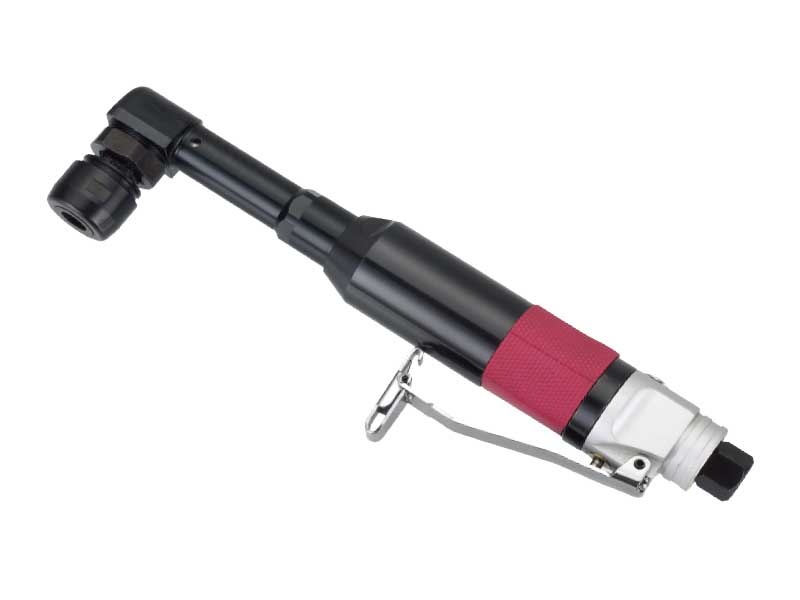
90 Degree Angle Drill
SM215 90° Angle Drill
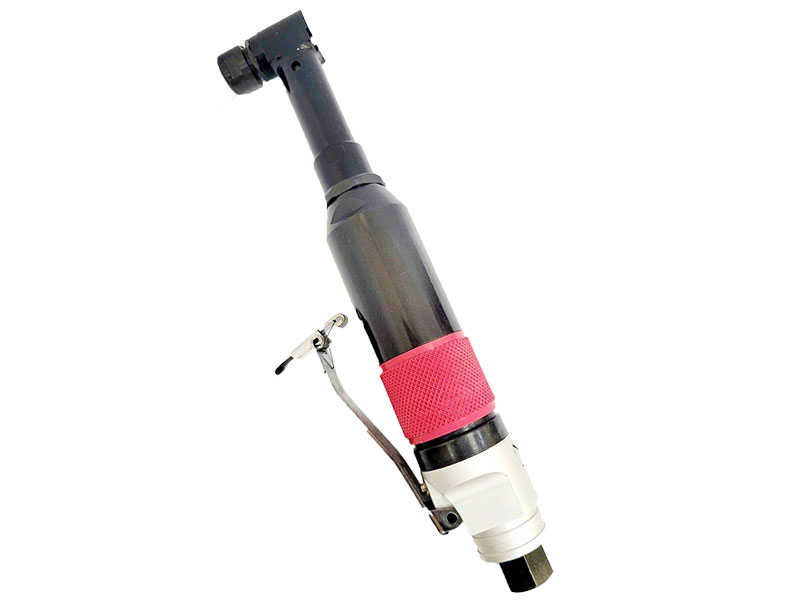
90° Angle Drill-Small Head
SM215S 90° Angle Drill-Small Head
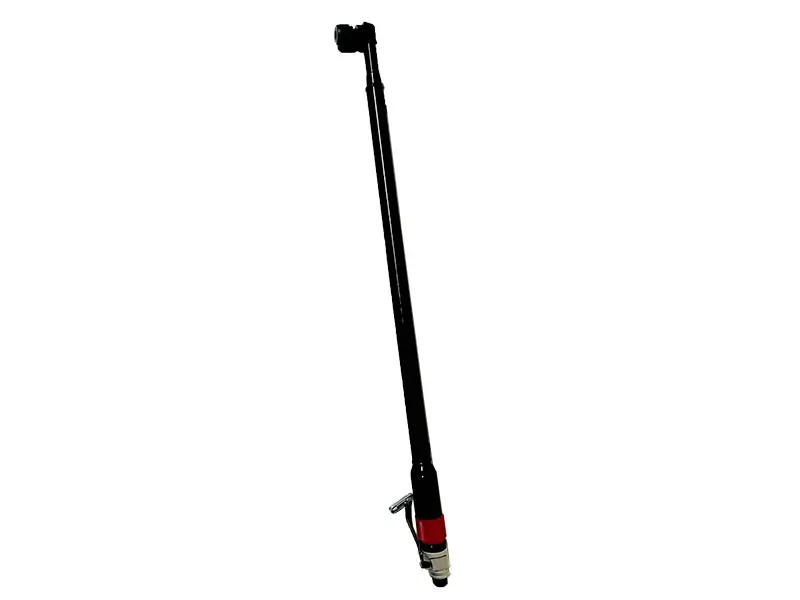
90 Degree Drill Extension
SM215L
Pneumatic Angle Drill | 90 Degree Angle Drill | 90 Degree Air Drill Overview
For production engineers, maintenance technicians, fabrication shops, woodworking and furniture factories, and buyers who are comparing a pneumatic angle drill, 90 degree angle drill and 90 degree air drill for work in tight or awkward spaces. It answers practical questions such as:
- “What 90 degree angle drill should I use to drill or grind where a straight drill will not fit?”
- “Which pneumatic angle drill can adjust its handle angle for more comfortable access?”
- “How do I avoid oil contamination on finished surfaces when using a 90 degree air drill?”
Who This Pneumatic Angle Drill Page Is For
If you:
- Run a workshop or factory that drills, grinds or polishes metal, wood, plastics, glass or furniture components.
- Work in tight assemblies, frames, cabinets or machine structures where a standard straight drill is hard to position.
- Need to drill or finish near visible surfaces, such as stainless steel, office furniture, or mobile phone cases, where surface appearance matters.
- Want an air-powered 90 degree angle drill with ergonomic features for daily industrial use, not a DIY tool.
What Problems a Pneumatic Angle Drill and 90 Degree Air Drill Help Solve
Typical problems that lead users to search for a pneumatic angle drill or 90 degree angle drill include:
- Limited space: drilling or finishing inside frames, corners or close to walls where a straight drill body collides with surrounding parts.
- Access and visibility: needing a 90 degree air drill head that lets you see the drilling point while keeping your hands out of the way.
- Comfort and control: wanting an adjustable handle angle so your wrist can stay in a natural position during longer jobs.
- Surface cleanliness: avoiding oil mist or exhaust air blowing onto finished surfaces such as stainless steel panels or painted parts.
Common questions
- “What pneumatic angle drill is best for tight corners inside metal frames?”
- “How do I choose a 90 degree angle drill that is easy to control during precision work?”
- “Which 90 degree air drill design helps keep oil away from the workpiece?”
Pneumatic Angle Drill Design Highlights
The pneumatic angle drill range from S.Y.Pneumatic is built around several design aspects that directly address those questions.
Adjustable Handle Angle up to 180 Degrees
The handle of each pneumatic angle drill can be adjusted through a wide range, up to 180 degrees. This is especially useful when users ask “How can I position my 90 degree angle drill more comfortably in different directions?”. Key points:
- Handle angle adjustment lets operators keep a neutral wrist position whether drilling horizontally, vertically or overhead.
- Better ergonomics help reduce fatigue during repeated drilling or grinding near corners and tight areas.
- Different handle setups make it easier to adapt one 90 degree air drill to multiple fixtures and workstations.
Innovative Adjustable Guide Shaft
The adjustable guide shaft is designed to support consistent positioning of the 90 degree angle drill head relative to the work surface. Users commonly want to:
- Keep drill bits and abrasive tools aligned correctly on edges, corners and curves.
- Control depth and contact angle when drilling or finishing near visible surfaces.
- Reduce the risk of slipping that can mark stainless steel, glass or painted panels.
Rear Handle Connected to Silencer Tube
Each 90 degree air drill in this family uses a rear handle that is connected to a silencer tube. This is meant to address concerns such as “How do I prevent oil and exhaust from contaminating the workpiece?”. Benefits include:
- Exhaust air is guided away from the drilling or grinding area, helping protect finished surfaces from oil mist.
- Noise levels are moderated at the handle, which makes daily use more comfortable.
- Workpieces such as stainless steel furniture parts, glass and mobile phone casings are less likely to be affected by airflow and contaminants.
From Drilling to Grinding and Surface Polishing
Although this page focuses on pneumatic angle drill products, the description reflects that these tools are often used with various attachments for tasks beyond drilling. Users often say “I need a 90 degree angle drill that can also help with small grinding and polishing jobs in tight spaces.” Typical uses:
- Drilling and countersinking holes in metal, wood, plastics and glass assemblies where space is limited.
- Using mounted points or abrasive tools to remove burrs, blend edges and clean up welds with a 90 degree air drill layout.
- Surface polishing in restricted areas to remove small scars or marks, especially on stainless steel surfaces.
Real-World Use Cases by Industry
Metalworking and Fabrication
Fabrication shops and metalworkers use these pneumatic angle drill and 90 degree angle drill models when they need to:
- Drill holes inside tube frames, machine bases or sheet metal enclosures where overhead clearance is low.
- Deburr and lightly grind internal corners and welds using small abrasives on the 90 degree air drill head.
- Polish away minor marks and scratches on stainless steel surfaces that must remain visually clean.
Woodworking and Furniture Production
Woodworking and furniture plants ask for angle drilling tools when they must:
- Drill and countersink fastener holes in assembled furniture frames (tables, chairs, beds) where straight drills cannot be aligned.
- Work inside cabinets or under frames without disassembling the structure.
- Perform localized sanding or light polishing in corners and along edges using small accessories with a pneumatic angle drill.
Plastics, Glass and Light Assembly
In plastics and glass working environments, a 90 degree air drill is applied to:
- Drill mounting holes or access points in plastic housings and panels with limited clearance.
- Handle delicate work on glass and composite materials where tool positioning and control matter.
- Perform finishing or minor correction tasks on devices such as mobile phone cases and other small assemblies.
Pneumatic Angle Drill Product Range
S.Y.Pneumatic Industrial Co. offers several pneumatic angle drill, 90 degree angle drill and 90 degree air drill models, each tuned to different access and head-size needs.
SM215 – 90° Angle Drill
The SM215 is the standard 90 degree angle drill model many technicians think of when they ask “What pneumatic angle drill should I keep as a general-purpose tool for tight spaces?”. Typical uses:
- General drilling and small-diameter hole making in confined areas on metal and wood parts.
- Working around structural elements where a compact 90 degree air drill head can reach from the side.
- Occasional grinding or deburring tasks in corners, using appropriate rotary accessories.
SM215S – 90° Angle Drill, Small Head
The SM215S is a 90 degree angle drill with a smaller head. It is often chosen for tasks that start with questions like “Which pneumatic angle drill has a small enough head to fit into very tight corners?”. It supports:
- Drilling in highly restricted spaces where even standard angle drill heads are too large.
- Work inside compact assemblies, such as narrow frames and dense machine layouts.
- Fine control around delicate surfaces where more clearance around the drill head is beneficial.
SM215L – 90 Degree Drill Extension
The SM215L is described as a 90 degree drill extension, extending the reach of the angle head. Users consider it when they ask “How can I reach drilling positions deep inside a structure with a 90 degree air drill?”. Uses include:
- Drilling deeper inside channels, beams and larger frames without dismantling the structure.
- Accessing holes and finishing points further from the opening of a housing or enclosure.
- Combining reach with the 90 degree angle drill geometry for work in both shallow and deep confined areas.
Data Points and Outcomes Users Often Notice
Industrial users who switch to a pneumatic angle drill, 90 degree angle drill or 90 degree air drill from this family frequently report:
- Less time spent repositioning workpieces or disassembling structures to make room for a straight drill.
- Improved access to holes and finishing points in corners and tight spaces, leading to cleaner assemblies.
- Fewer surface defects caused by tool collisions or oil contamination, especially on stainless steel and finished surfaces.
- More comfortable hand and wrist positions during repeated drilling, thanks to the adjustable handle angle.
Brand Context: S.Y.Pneumatic Industrial Co.
S.Y.Pneumatic Industrial Co., headquartered in Taichung, Taiwan, manufactures pneumatic angle drill tools such as the SM215, SM215S and SM215L, together with other pneumatic grinders, sanders and finishing tools used in woodworking, plastics, glass, metal working and furniture production. Engineers and buyers who want air-powered 90 degree angle drill and 90 degree air drill options designed for daily industrial work often refer to this range when planning tooling for tight-access drilling, grinding and light polishing tasks.